A solar panel mounting system is often treated as a line item: compare aluminum thickness, check a datasheet, negotiate price, and move on. On paper, that seems efficient. In practice, it is where many solar system project risks begin. When procurement teams, EPCs, or distributors focus too narrowly on quoted price and headline specs, they can miss the two factors that most directly affect long-term project reliability: certification and load calculation.
That gap matters. A low initial price can disappear quickly if the structure is under-engineered, poorly documented, difficult to install, or vulnerable to compliance disputes. For professional buyers, the real objective is not simply to buy hardware. It is to reduce execution risk, protect project margins, and deliver a solar system that performs as expected under real site conditions.
Why price comparisons often fail to solve the real problem
Many buyers spend weeks comparing suppliers, material grades, component lists, and unit prices. Yet projects still face delays, redesigns, installation issues, or warranty concerns later. The reason is simple: a mounting structure is not just a product. It is a site-specific structural solution.
Two offers may look similar in a spreadsheet but be very different in real-world performance because of:
- Wind and snow load assumptions
- Terrain and soil conditions
- Roof type and roof integrity constraints
- Fastener quality and corrosion protection
- Engineering documentation quality
- Certification status
- Installation tolerance and labor efficiency
- After-sales technical response
This is why repeated product comparison can create the illusion of control without reducing actual project risk. Buyers who focus only on dimensions and price may still end up with a solar mounting system that creates hidden costs downstream.
The hidden cost of choosing on specs alone
Headline specs can be useful, but they rarely tell the full story. A profile dimension or material label does not automatically confirm whether the system is suitable for your site, jurisdiction, or loading conditions.
The hidden costs often appear in four places:
1. Redesign and approval delays
If the initial design package lacks credible calculations or recognized certification support, the project may stall during engineering review, permitting, or client approval. That delay affects schedules, labor planning, and cash flow.
2. Installation inefficiency
A system can appear competitive on ex-works price but require more field adjustments, more fasteners, more labor hours, or more skilled installers. In that case, the lowest quotation may produce a higher installed cost.
3. Long-term performance risk
If structural loads are not properly evaluated, the system may face excessive deflection, loosening, water ingress issues on rooftops, or premature wear in corrosive environments. The result is not just maintenance cost. It is reputational risk.
4. Dispute exposure
When performance problems occur, poorly documented design assumptions create finger-pointing between supplier, installer, and project owner. Strong documentation reduces ambiguity. Weak documentation increases commercial tension.
Certification is not paperwork. It is risk control.
For many buyers, certification is treated as a box to tick late in the sourcing process. That is a mistake. Certification is one of the clearest indicators that a supplier understands quality consistency, engineering discipline, and market access requirements.
A certified solar panel mounting system does more than support panels physically. It helps support:
- Project bankability
- Smoother approval processes
- Reduced compliance uncertainty
- More credible procurement decisions
- Better confidence for distributors and EPC partners
In short, certification helps translate a technical purchase into a lower-risk business decision.
What buyers should look for in certification review
The exact required certifications depend on market, application, and customer requirements, so buyers should verify project-specific needs. Still, the review should typically include:
- Product or system testing relevance
- Material traceability
- Manufacturing quality management
- Corrosion resistance considerations
- Structural design methodology
- Documentation completeness for approval and handover
If any claim cannot be clearly supported, it should be treated cautiously until confirmed. In technical procurement, undocumented assumptions are often more expensive than higher upfront pricing.
Why load calculation matters more than many buyers realize
Load calculation is where a mounting system stops being generic and becomes project-ready.
A solar system on a brochure may look universal. A solar system on a roof or ground site is not. Wind speed, snow accumulation, building height, terrain category, module layout, tilt angle, and foundation conditions all influence structural demand. Without proper load calculation, even a well-made product can be misapplied.
A direct answer for busy buyers:
Load calculation determines whether the mounting system is structurally suitable for the actual site. Without it, price and specs alone cannot confirm safety, compliance, or lifecycle value.
That is why experienced buyers ask not only, “What is the price?” but also:
- What design standard was used?
- What site parameters were assumed?
- Is the calculation project-specific or generic?
- How are wind uplift and snow load handled?
- What safety factors are applied?
- Can the supplier support engineering clarification if the reviewer asks questions?
These are not academic details. They affect whether the solar system project moves smoothly or becomes a problem later.
The business case for better engineering documentation
Good engineering support is often undervalued because it does not appear as a visible component on the bill of materials. But in B2B purchasing, documentation quality can directly affect project economics.
A mounting supplier that can provide clearer engineering packages may help reduce:
- Design revision cycles
- Approval bottlenecks
- Installer uncertainty
- Site errors
- Change-order exposure
- Warranty ambiguity
This matters especially for importers, EPCs, and distributors managing multiple stakeholders. Your customer is not only buying a structure. They are buying confidence that the structure can be specified, shipped, installed, and defended.
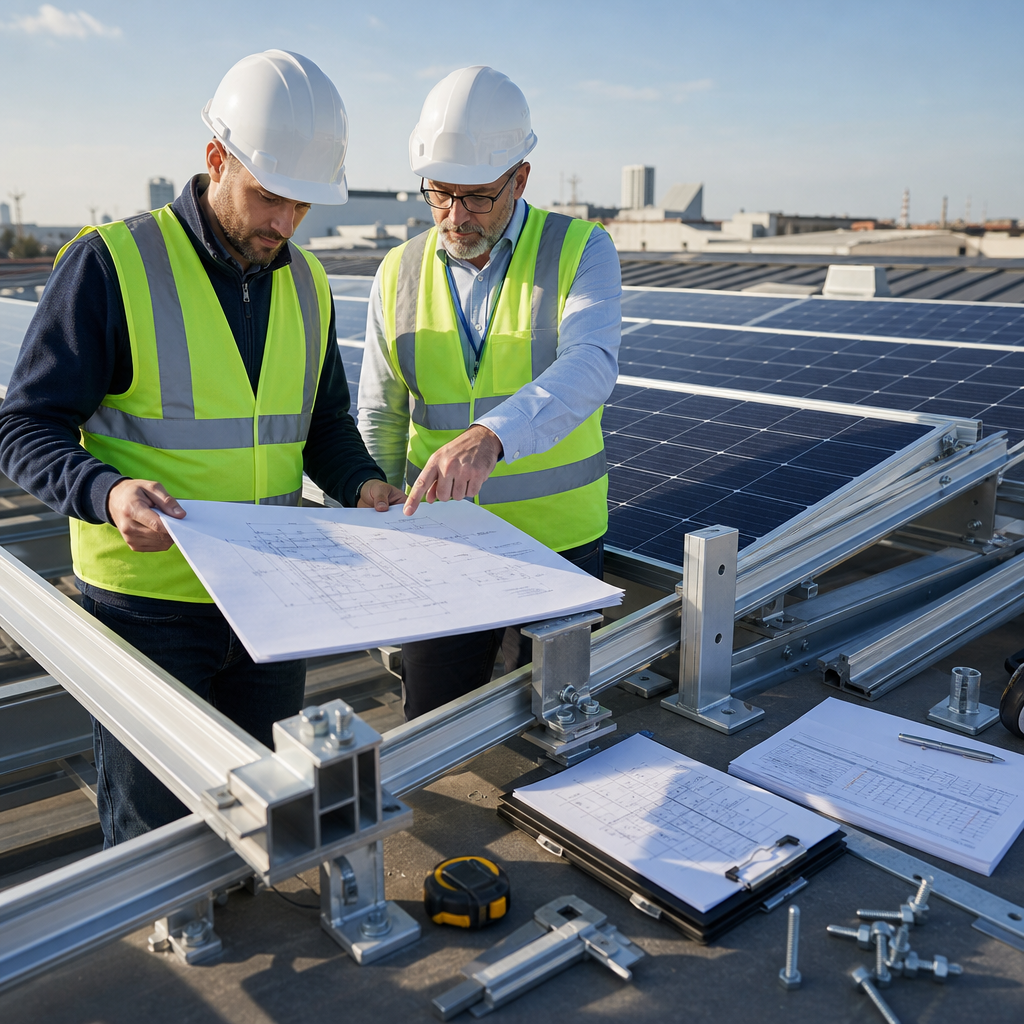
[Image suggestion: engineering team reviewing rooftop solar mounting drawings and structural load documents. Alt text: “Engineers reviewing solar panel mounting system load calculation and certification documents”]
How to evaluate a solar mounting system beyond price
A more reliable sourcing process starts by reframing the decision. Instead of asking, “Which supplier is cheapest?” ask, “Which option is most likely to deliver a smooth project with fewer surprises?”
Here is a practical evaluation framework.
1. Check whether the system fits the application, not just the module
A compatible module interface is only the beginning. The solar mounting system must match the actual application:
- Metal roof, tile roof, flat roof, carport, or ground mount
- Local climate and environmental exposure
- Installation method and crew capability
- Structural interface with the existing building or foundation
If you are reviewing options across different applications, it helps to compare product pathways and design scenarios, not just component prices. Explore relevant configurations on MagiSolor’s solar panel mounting system product page to assess solution fit more meaningfully.
2. Ask for project-based load assumptions
Do not accept a generic statement like “suitable for high wind” without context. Ask for the assumptions behind the claim. A credible supplier should be able to explain how the system is evaluated and what inputs are required.
Key questions to raise with suppliers
Site and structural questions
- What wind speed and snow load were used?
- What terrain category or exposure assumption applies?
- What roof height or array height is assumed?
- Are uplift, lateral load, and deflection considered?
Documentation questions
- Is there a calculation report or summary?
- Can the design be adapted to project conditions?
- What installation constraints affect structural performance?
The more clearly these questions are answered, the less likely your team will face surprises during review or construction.
3. Review certification as part of procurement, not after selection
A common sourcing failure is to choose a vendor first and verify compliance later. That sequence creates rework risk. Certification and documentation should be part of the evaluation matrix from the start.
For technical reference on solar deployment and system performance context, buyers can also review resources from the U.S. National Renewable Energy Laboratory (NREL), a widely respected authority in the sector.
4. Consider installation efficiency and total delivered value
Total cost is not the same as purchase price. A slightly higher unit price may still produce lower total project cost if the system offers:
- Faster installation
- Lower error rates
- Better packaging and logistics
- Fewer missing parts
- More responsive technical support
- Less redesign work
Professional buyers know that margin leakage often happens between procurement and commissioning, not just at the point of quotation.
5. Evaluate supplier partnership quality
In a complex solar system project, the supplier relationship matters. When engineering clarification, replacement parts, or design adjustments are needed, response quality becomes part of the product value.
This is especially important for buyers building repeatable supply chains. You are not just sourcing for one PO. You are assessing whether the supplier can support consistency across future jobs. For broader project pathways, application scenarios, and planning support, review MagiSolor’s solar mounting solutions page.
[Image suggestion: installed rooftop solar system in a commercial setting with secure rails and clamps. Alt text: “Commercial solar panel mounting system installed with engineered structural support”]
What smart buyers are really trying to avoid
Behind every mounting system inquiry, there is usually a deeper concern. Buyers are not just trying to purchase metal parts. They are trying to avoid:
- Being blamed for choosing the wrong supplier
- Delays that damage client trust
- Rework that erodes margin
- Compliance issues that slow project handover
- Field failures that create warranty pressure
- Technical uncertainty that weakens bid confidence
That is why the right decision framework goes beyond a product sheet. It connects structural reliability to operational confidence.
A well-chosen solar panel mounting system helps a project owner or contractor become something valuable in the market: dependable. That reputation is hard to win and easy to lose.
A better way to compare suppliers
If you need a simple decision model, compare suppliers across five weighted categories instead of price alone:
- Technical suitability
- Certification and documentation
- Load calculation credibility
- Installation and logistics efficiency
- Commercial terms and support responsiveness
Price still matters. It should. But it belongs inside a broader risk-adjusted comparison.
When buyers use this model, they often discover that the cheapest option is only cheapest in the quotation file, not in project reality.
[Image suggestion: procurement manager comparing supplier proposals with a solar site plan on screen. Alt text: “Procurement review of solar mounting system proposals for a commercial solar system project”]
FAQ
What is the most important factor when choosing a solar panel mounting system?
The most important factor is project suitability under real site conditions. Price and basic specs matter, but they do not confirm whether the system is appropriate for wind, snow, roof type, corrosion exposure, and installation constraints. Certification and load calculation are critical because they help validate performance and reduce project risk.
Why are load calculations necessary for a solar mounting system?
Load calculations are necessary because every site experiences different structural forces. Wind uplift, snow load, terrain exposure, building height, and array configuration can all affect the required design. Without proper load calculation, a solar mounting system may be overbuilt, underbuilt, or simply mismatched to the application.
Do certifications really matter if the product specs look similar?
Yes. Similar specs do not guarantee similar quality control, testing relevance, documentation quality, or compliance readiness. Certification helps buyers verify that the supplier follows recognized processes and can better support approvals, audits, and professional due diligence.
Is the lowest-priced solar system mounting structure usually the best value?
Not always. The lowest-priced option may lead to higher total cost if it creates redesign work, longer installation time, approval delays, or warranty issues. Best value usually comes from the option that balances structural reliability, documentation quality, installation efficiency, and responsive support.
How can buyers reduce risk in a solar system project?
Buyers can reduce risk by evaluating more than unit cost. Ask for project-specific load assumptions, review certification early, confirm documentation quality, and assess the supplier’s ability to support implementation. A structured sourcing process is often more valuable than another round of price negotiation.
Conclusion
Choosing a solar panel mounting system on price and specs alone can feel efficient, but it often leaves the real risks untouched. For professional buyers, the better question is not “How little can we pay?” but “How confidently can we deliver this project?”
Certification and load calculation are not secondary details. They are part of the foundation for safer approvals, smoother installation, stronger project outcomes, and lower long-term risk.
If you are evaluating options for an upcoming solar system project, explore MagiSolor’s product range and solution pathways to compare not just components, but decision quality.